Building design systems and leading creative teams
A company-wide design system, a measurable design-quality framework and the leadership of a 30-designer UI/UX department.
- Role
- UI/UX Department Lead
- Period
- May 2025 – Present, full-time
- Timeline
- 2 months for the design system
- Team
- 30 designers, reporting to the CEO
- Scope
- Design system · Design QA · Team leadership
- 30Designers led
- 558Outputs reviewed
- 93.91%30-day success rate
- 15+System iterations
00In 30 seconds
01Problem
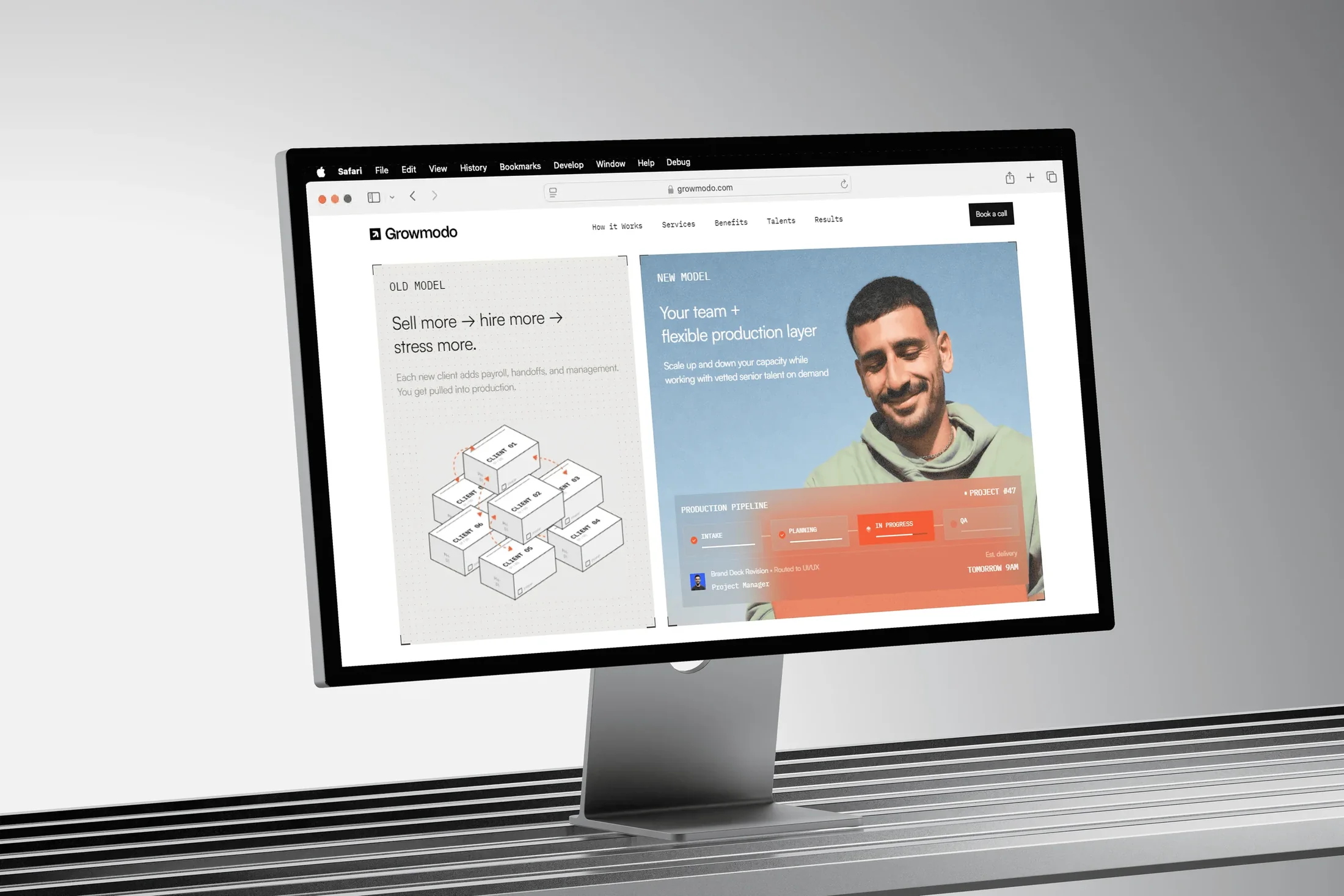
Many designers and developers, no single source of truth. Decisions were made again on every project, output drifted and reviews were slow.
02What I did
Built the company-wide design system in about 2 months and 15+ iterations, documented it for every discipline and introduced measurable design QA.
03Outcome
A reported 93.91% success rate across 558 reviewed outputs in one 30-day period, and a role that grew into department leadership.
01Challenge
Many hands, no single source of truth.
- 01
Decisions made again and again
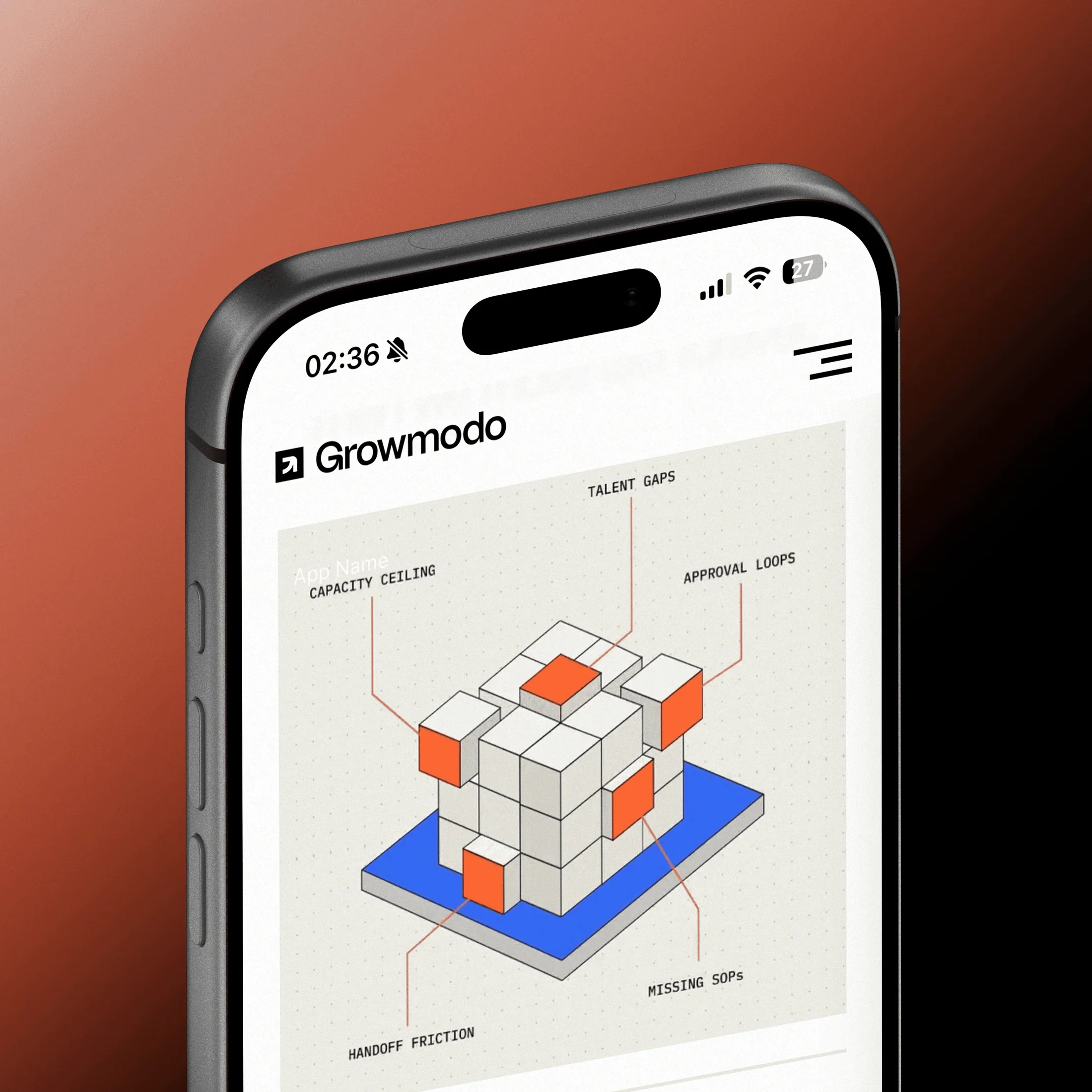
Typography, grids, components and responsive rules were decided again on every project, so work was inconsistent and slow to review.
- 02
Consistency can’t live in memory
Repeated decisions created variation and harder handoffs. The team needed one shared language, with room to solve different problems.
- 03
It had to work beyond design
Clear for designers, practical for developers and readable for the project managers and stakeholders reviewing the work.
02Leadership
30 designers. One quality bar.
I lead the UI/UX department, reporting directly to the CEO. Designers move between websites, product interfaces, mobile apps and e-commerce as projects need, working from one design system and one quality bar.
CEO
Growmodo
Graphic Design
Department lead
Brand Design
Department lead

UI/UX Design
Department lead
30 designers
Motion Design
Department lead
Presentation Design
Department lead
UI/UX team
30 designers
Everyone works across
Me
Designer
Illustrative structure. People are shown as anonymous illustrations.
03What I did
A system people adopt, and quality you can measure.
- 01
A design system, built from zero
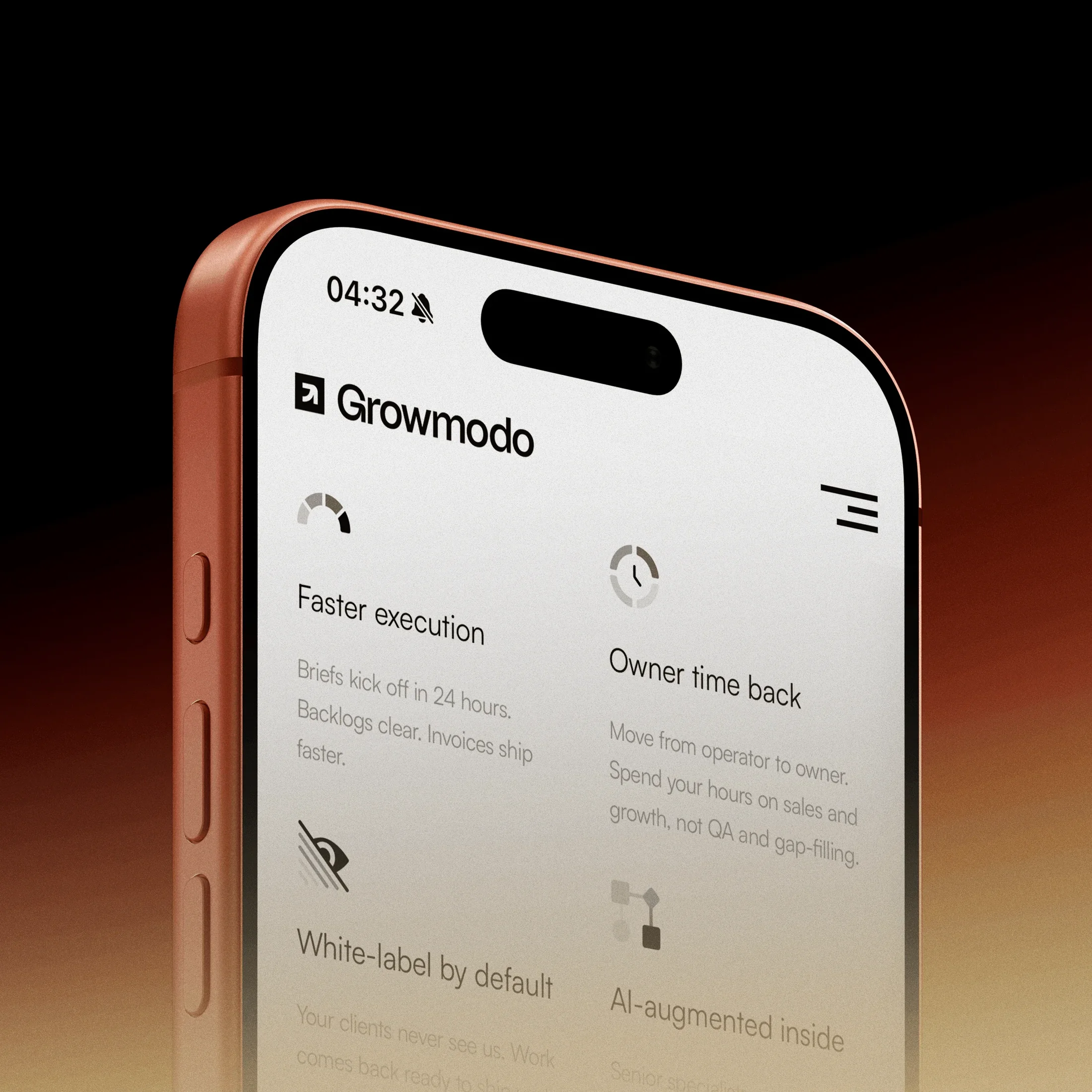
Foundations for type, colour, spacing, layout, grids, icons, states and responsive behaviour, turned into reusable components and patterns. 15+ iterations with the CEO.
- 02
Built for adoption
Component logic, usage rules and quality expectations documented, so designers, developers and reviewers work to the same standard.
- 03
Quality you can measure
Weekly and monthly reporting on QAS, reviewed outputs, issue counts and issue-free delivery, turned into coaching and process changes.
- 04
Scalable design workflows
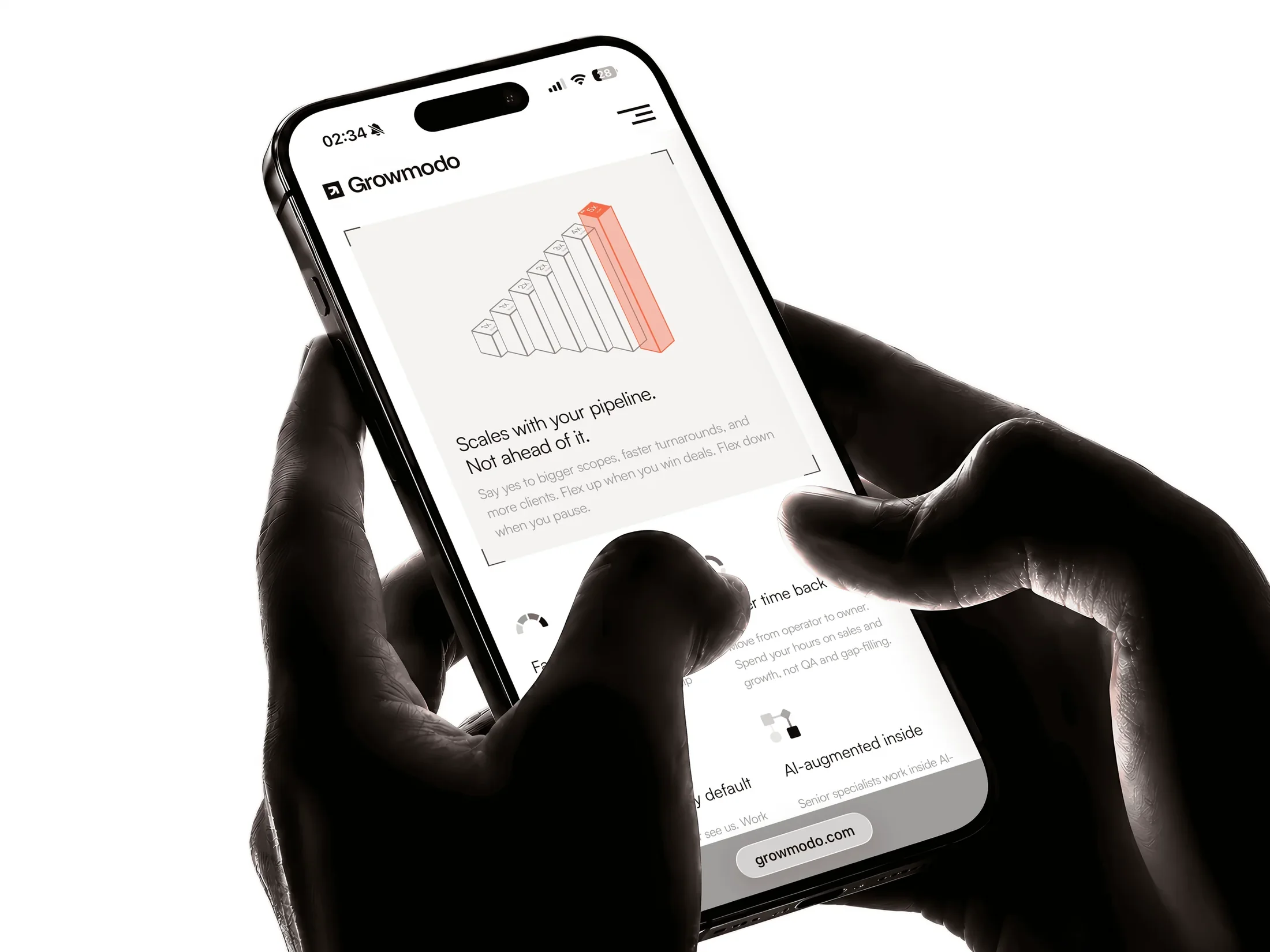
Structured task estimation, self-QA checklists and early blocker escalation, improving delivery efficiency, design consistency and cross-functional collaboration.
- 05
AI in the workflow
Pages prototyped in code with Claude Code and imported into Figma as editable layers, so reviews start from something real and move faster.
04Outcome
93.91% success across 558 reviewed outputs.
- 93.91%30-day success rate
- 558Outputs reviewed
- 15+System iterations
One shared language
The system became the central reference for design and implementation: fewer repeated decisions, more consistent pages, components and deliverables.
Quality made visible
Average QA ratings of 3.99/5 (Website), 3.97/5 (Performance) and 4.05/5 (App) gave leadership a clear view of quality, recurring issues and where the team needed support.
Accountable, not micromanaged
Designers, developers, QA and project managers aligned on shared expectations and structured handoffs.
From senior designer to department lead
Joined as Senior UI/UX Designer & AI Expert, grew into UI/UX Department Lead: mentoring, reviews, KPI tracking and stakeholder alignment.
05Credits
- Role
- UI/UX Department Lead
- Worked with
- CEO, designers, developers, QA, project managers
- Team
- UI/UX department, 30 designers
- Tools
- Figma
- Claude Code (Opus & Fable)
- AI Agents
- ChatGPT
- OpenClaw
- Photoshop
- Illustrator
- Figma Make
- Notion